Busy holiday schedules don’t leave much room for elaborate crafting, but a handful of simple supplies can still produce ornaments that look thoughtful rather than rushed. This roundup of 20 simple DIY Christmas ornaments focuses on techniques that work with basic tools and materials you likely already have around the house, from paper and twine to fallen pine cones and old light bulbs.
Whether your tree leans rustic, modern, or somewhere in between, these projects offer a low-pressure way to add handmade charm without a trip to the specialty craft store.
Rustic Charm: Mini Tree with Wooden Ornaments
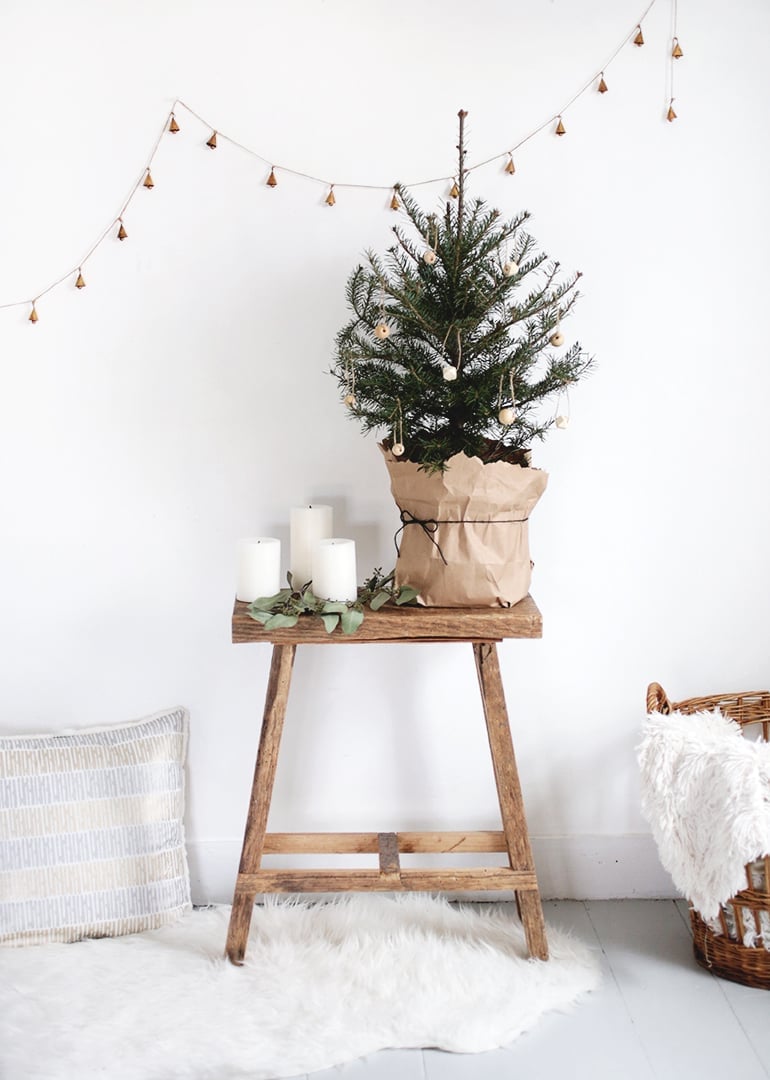
A small tree with wooden ornaments and candles creates a vignette that feels complete without needing much space. The palette sticks to green, brown, and white, which keeps the look minimalist and rustic. What defines this style is the ratio of natural materials: wood and paper outnumber anything shiny or synthetic. What breaks it is adding metallics or bright colors that pull attention away from the simple textures. The layout works best on a side table or mantel where the tree becomes the focal point and the candles provide soft ambient light.
Geometric Paper Honeycomb Ornaments
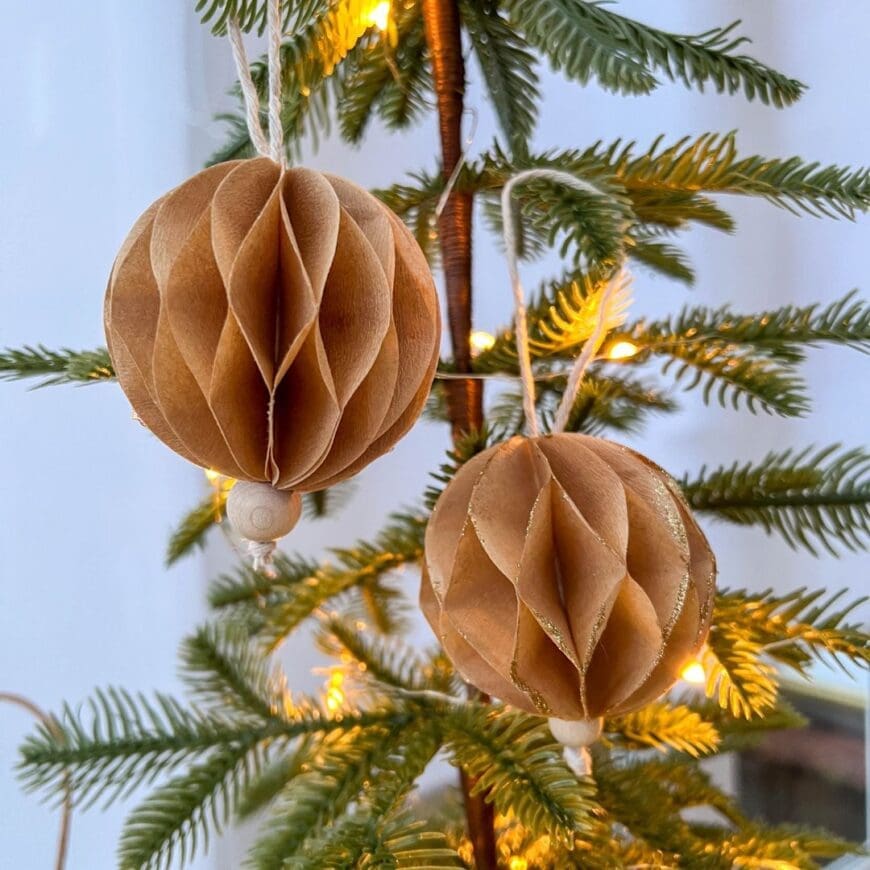
These paper honeycomb ornaments are a straightforward way to add texture without clutter. The palette pairs brown, gold, and green, which reads as natural and grounded. The defining feature is the geometric paper structure, which catches soft ambient light and casts subtle shadows. Overcrowding them on a single branch hides each ornament’s shape, so hang them at different heights on a tree or in a window. This lets the wood bead accents and greenery stand out. The ratio of paper to wood bead keeps the design airy.
Scandi Style: Cozy Felt and Yarn Gnomes
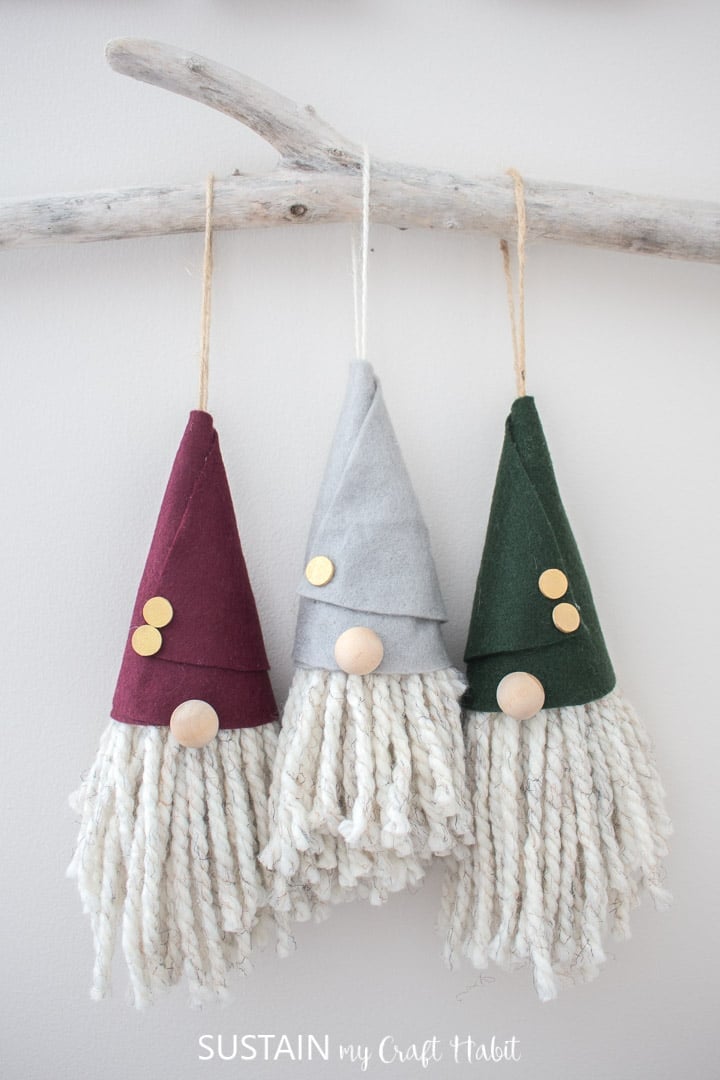
A felt gnome ornament reads as intentional when the palette stays muted. These gnomes use gray, green, burgundy, and cream, which keeps them warm without looking busy. The yarn beards add texture, while the felt bodies stay simple and flat. One yarn beard per gnome is enough for a Scandi look. Adding extra embellishments like sequins or glitter can make the ornament feel cluttered. The wood and twine accents tie the group together, so they hang well as a set on a branch or across a mantel.
Natural Elements: Wood Slice and Pine Cone Ornaments
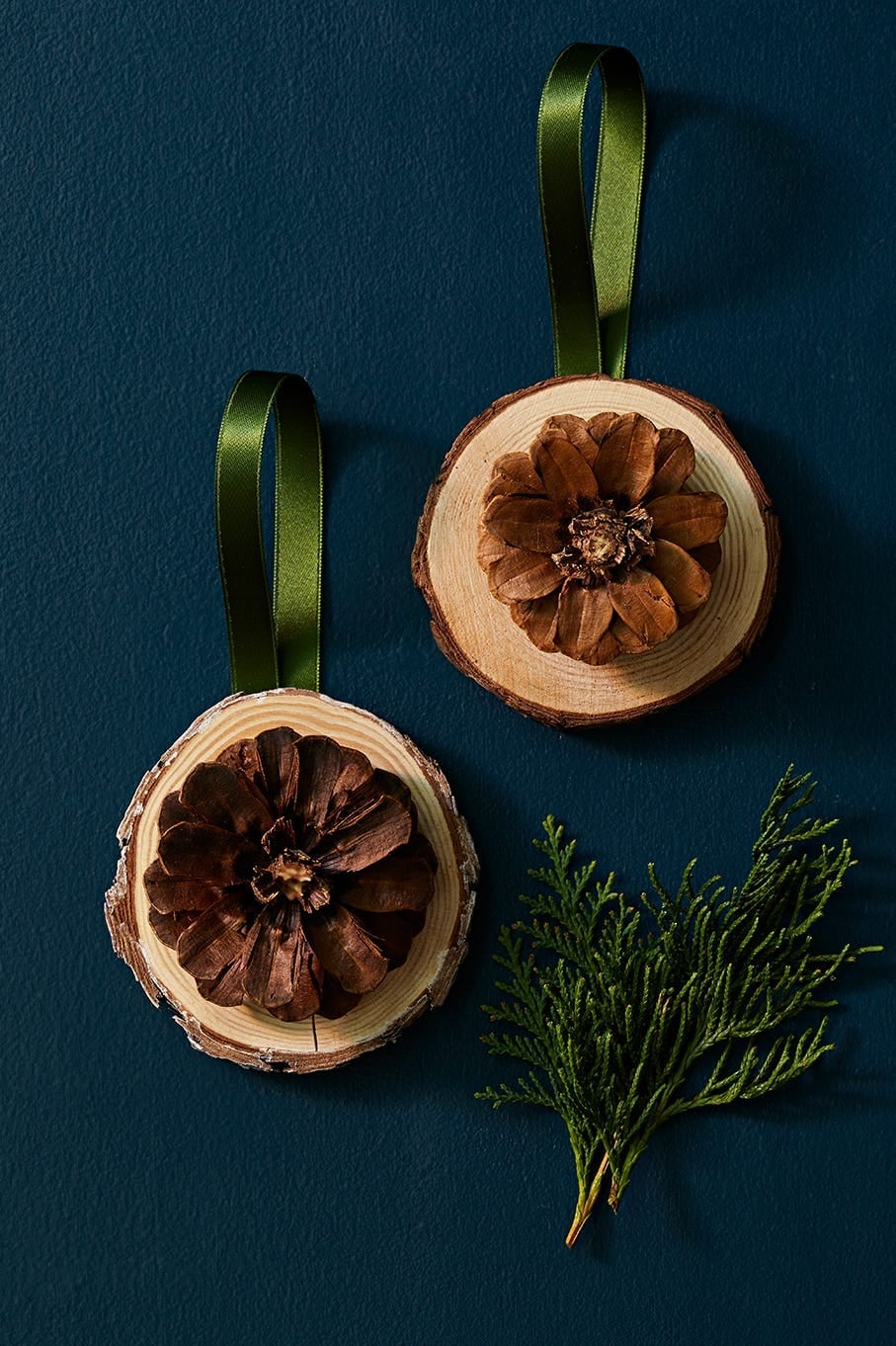
Wood slice ornaments paired with pine cones bring a tactile quality that synthetic materials cannot match. The palette stays in brown, green, and navy, which grounds the design in nature. Soft studio light brings out the grain of the wood and the texture of the pine cone scales. The flat lay layout works well for photographing or storing them, but on a tree, space them so each ribbon loop hangs freely. The key is letting the natural materials speak for themselves without adding paint or glitter.
Textural Interest: Striped Fabric Hoop Ornament
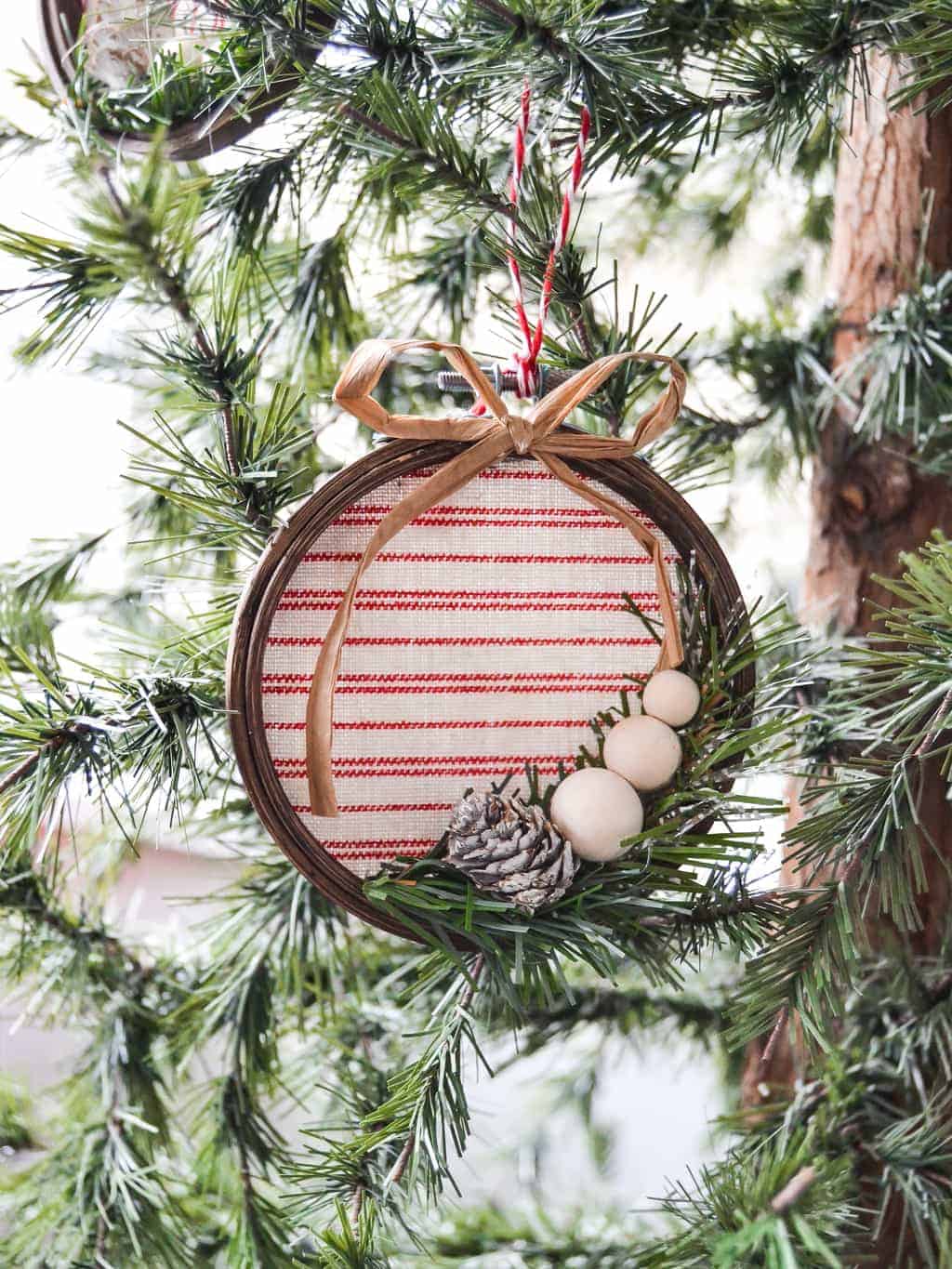
A practical rule for hoop ornaments is that the fabric should be taut enough to hold its shape but loose enough to show texture. This version uses red and white striped fabric wrapped around a wood hoop, with a pinecone hanging below. The rustic palette of red, white, brown, and green keeps it cohesive with a traditional tree. The striped fabric is the defining element, so avoid adding patterns that compete with it. For storage, wrap each hoop in tissue paper and nest them flat in a box so the fabric does not crease. The ribbon loop should be knotted securely to keep the pinecone from sliding.
Upcycled Charm: Repurposed Light Bulb Ornaments
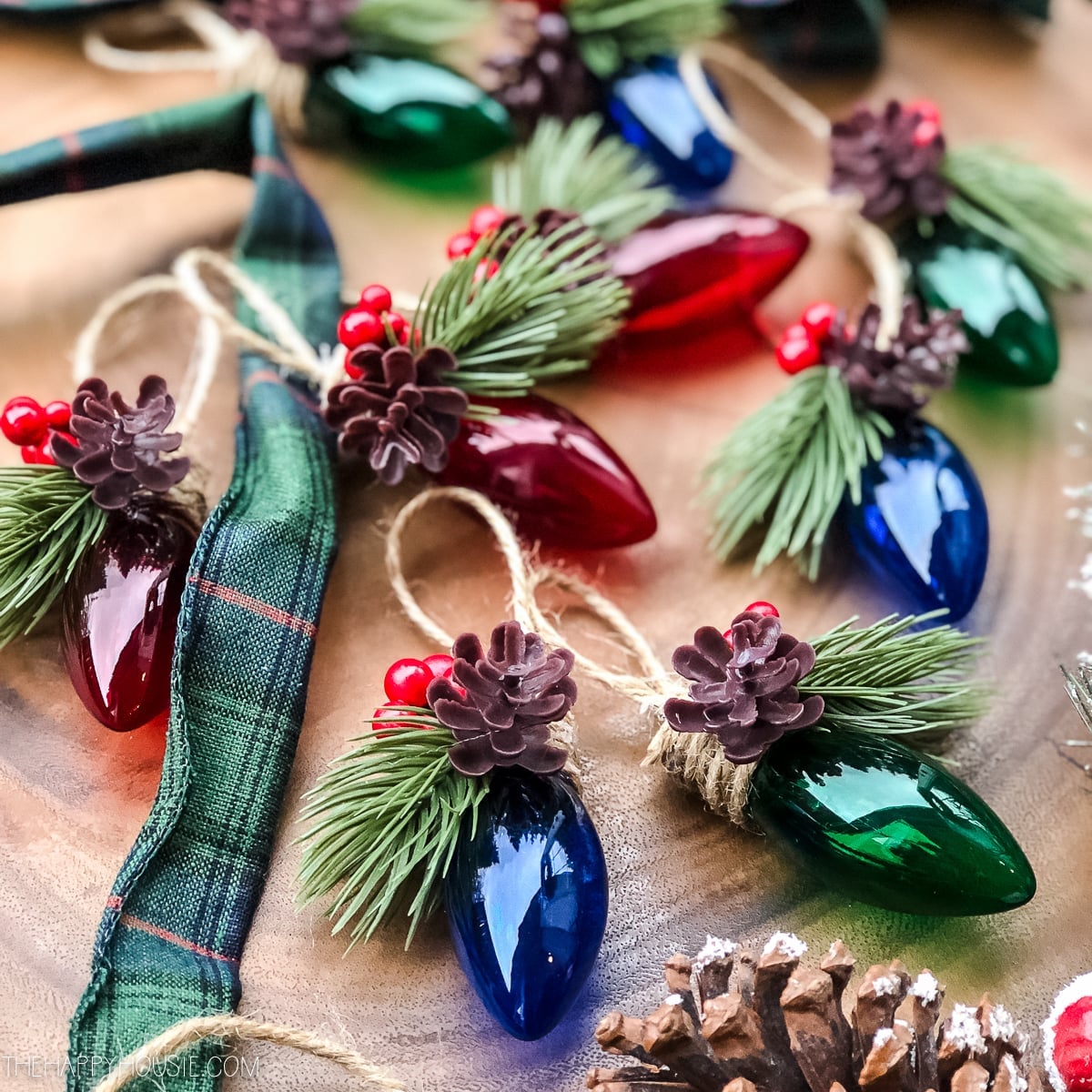
Store-bought glass ornaments are fine, but they lack the story a repurposed object brings. These ornaments start with old plastic bulbs, wrapped in twine and dressed with pine sprigs, berries, and a strip of plaid fabric. The result reads as rustic rather than recycled, with red, green, and blue bulbs adding a cheerful palette against the brown of the twine. The style works because the materials stay consistent: natural textures and a limited color range keep the look from feeling like a junk drawer. What breaks it is mixing in glossy or metallic accents. A flat wooden surface under the arrangement reinforces the handmade feel without competing for attention.
Minimalist Design: Beaded Twine Tree Ornament
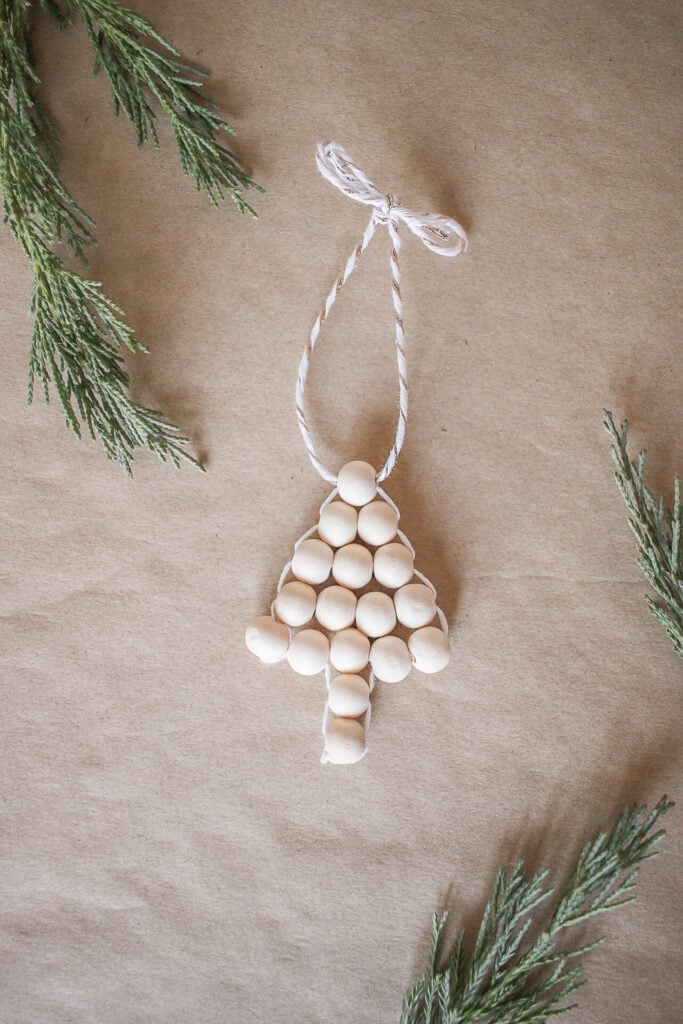
A single ornament made of wood beads strung into a tree shape offers more restraint than most store-bought options. The twine ties the beads together, and a small piece of greenery at the base adds the only color. The palette stays in the wood, white, and green range, so it fits a minimalist or rustic tree without looking unfinished. Soft natural light keeps the shadows gentle and the texture of the beads readable. For renters who cannot change their tree’s location, this ornament works because it does not rely on a specific backdrop or elaborate display.
Nature’s Touch: Fillable Ornaments with Greenery
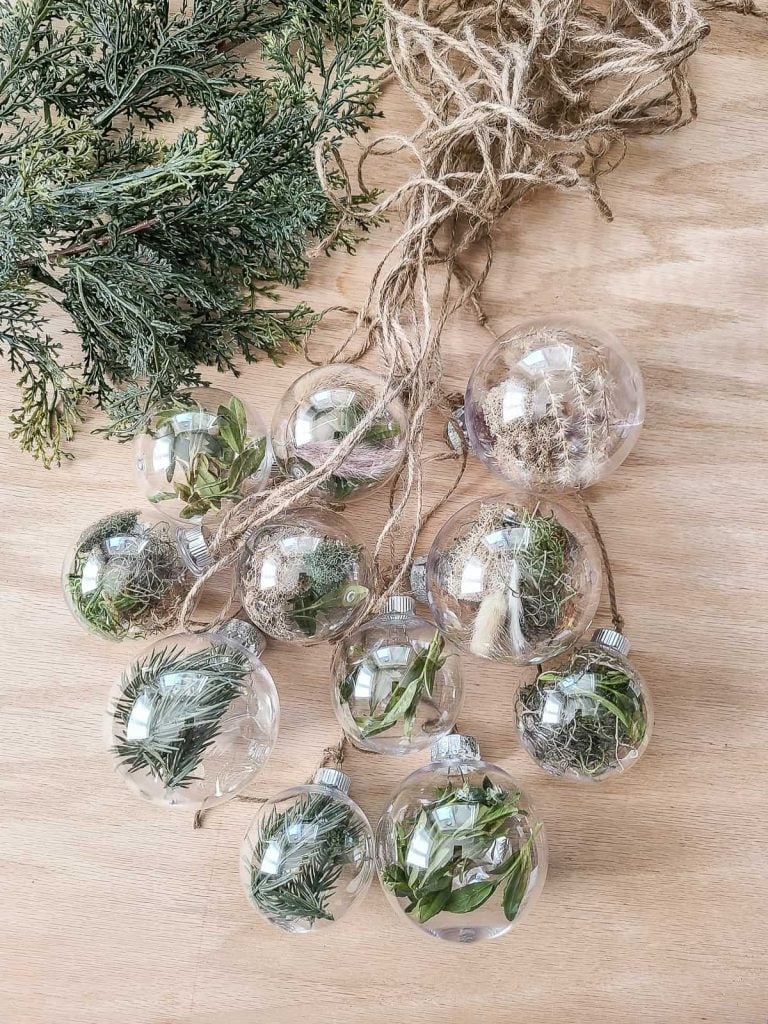
Clear plastic fillable ornaments offer a simple formula: stuff them with greenery and call it done. The result looks natural rather than store-bought, with the brown of twine and wood accents grounding the bright green inside. Scattered across a surface in a flat lay, they read as a cohesive set even though each one holds a slightly different arrangement. The style depends on keeping the filler sparse; too much greenery turns the ornament into a solid green blob. A bright, natural light source helps the clear plastic disappear so the focus stays on the contents.
Origami Art: Folded Red Paper Ornament
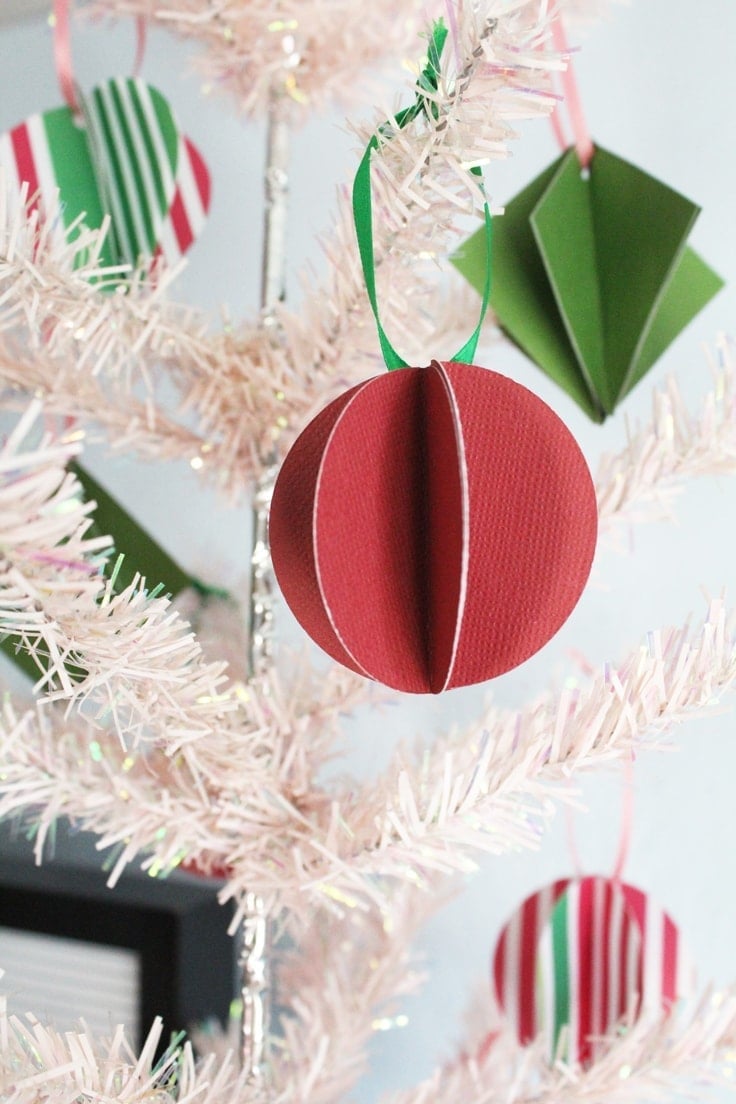
Will a paper ornament hold up on a tree for the whole season? The answer depends on the fold. A geometric sphere made from folded red paper gains strength from its own structure, with each crease adding rigidity. Hung against a tree with soft ambient light and bokeh in the background, the red stands out against the green needles. A white ribbon serves as the hanger, keeping the palette to red, green, and white. The style relies on precision: uneven folds break the geometric effect. Paper ornaments work best in low-traffic spots where they will not get brushed by sleeves or pets.
Whimsical Wildlife: Dried Orange Slice Fox Ornaments
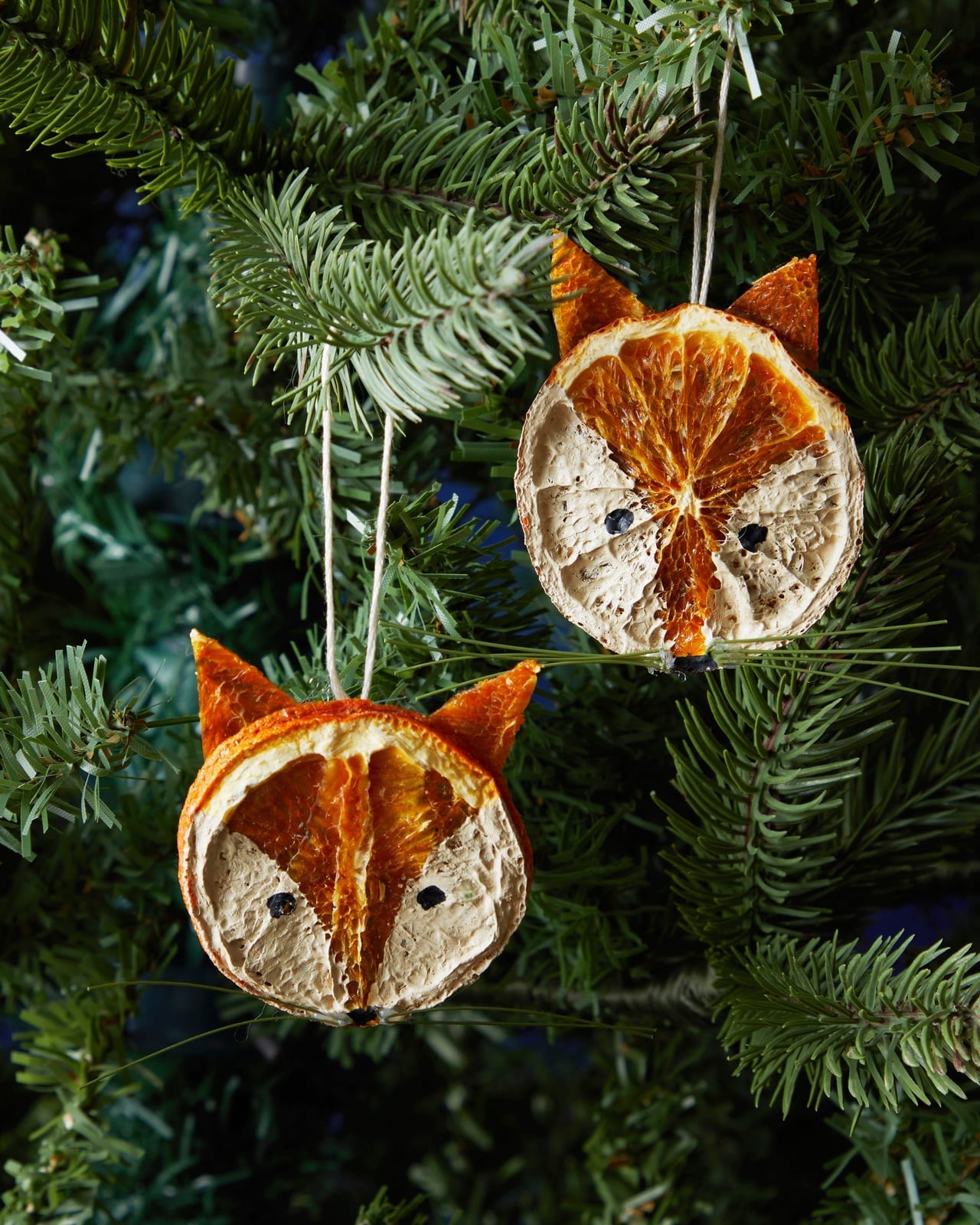
A dried orange slice cut into a fox face shape brings a touch of woodland whimsy to the tree. The orange, brown, and green palette fits a natural or rustic theme, and the dried fruit adds texture that plastic cannot mimic. Hung among pine branches with soft natural light, the fox faces stand out without overwhelming the tree. The design works because the orange slice is large enough to read as a fox, but not so large that it dwarfs the other ornaments. Keeping the shape simple is what makes the animal readable.
Textured Trees: Green Yarn Ornaments with Felt Stars
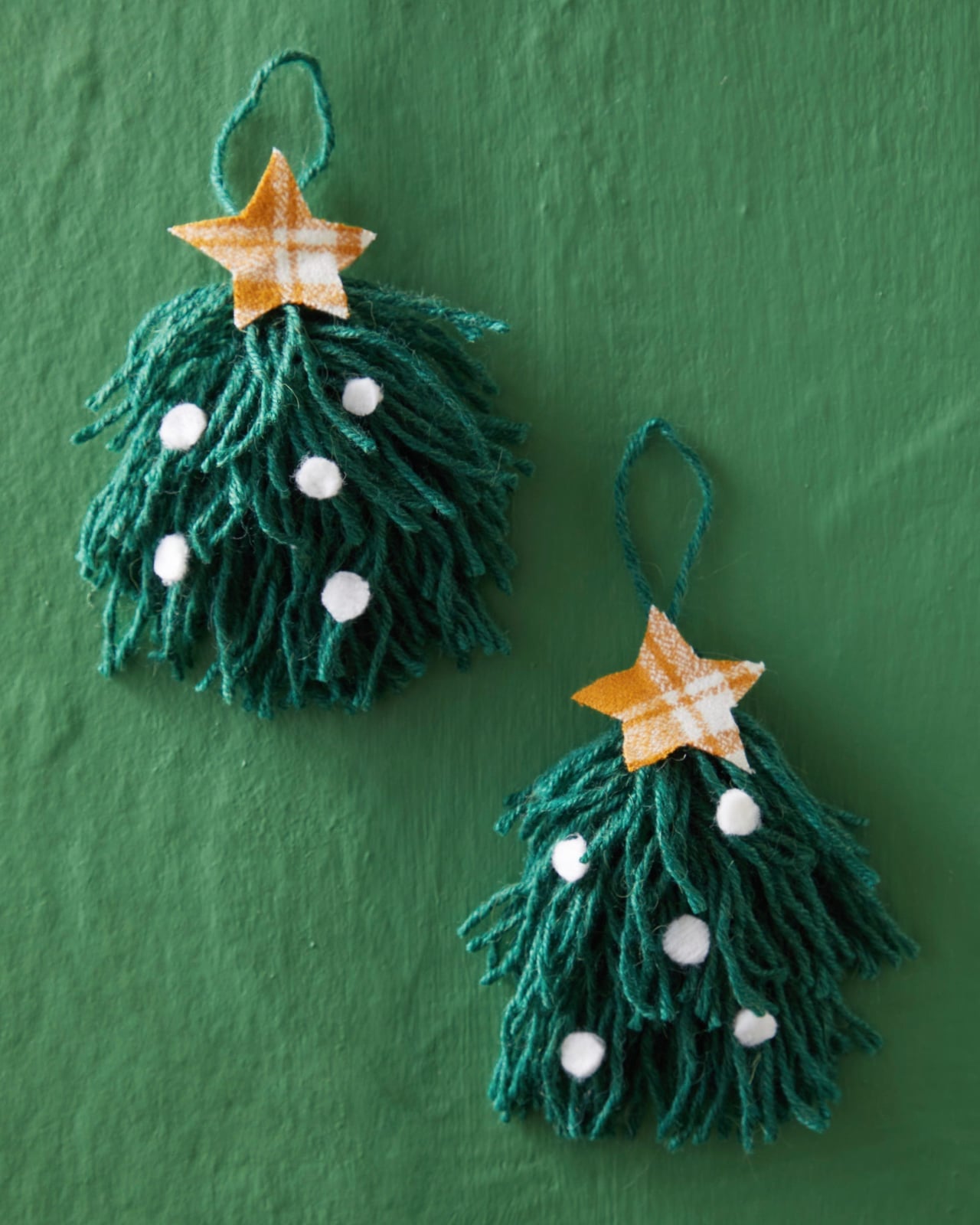
Handmade ornaments work best with a simple shape that lets the material add the interest. These small green yarn trees prove the point. Wrapped tightly so the texture reads clearly, each one tapers to a point and sits on a natural wood slice base. A tiny felt star in yellow or white tops the tree, and a few red beads or felt berries add a subtle pop of color. Hung against a green tree, the varied textures keep them from blending in. The soft yarn, the smooth felt, and the raw wood give the set a whimsical, rustic feel. The yarn does the work, so the silhouette stays straightforward.
Simple Shapes: Wooden Clothespin Star Ornaments
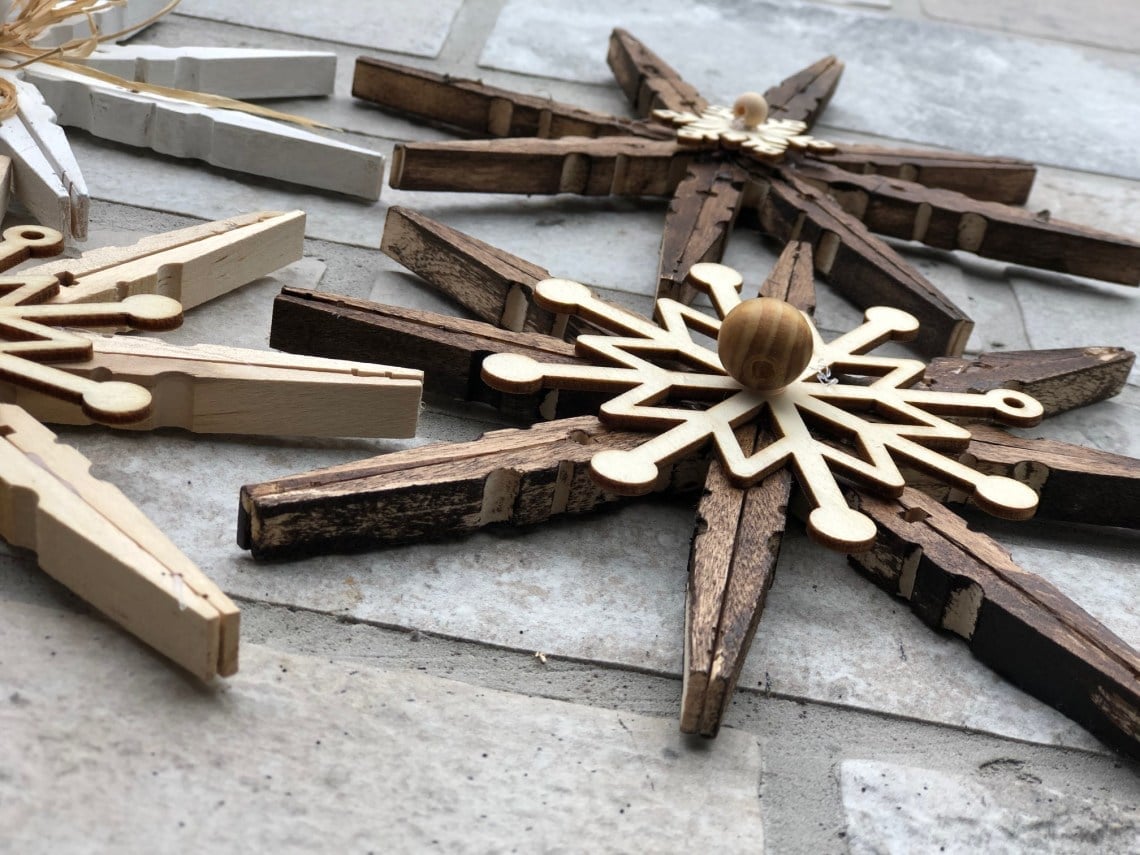
If a star ornament feels too delicate or too precious, this version takes a different route. Made from flat wooden clothespins, the star shape is graphic and sturdy. The clothespins are arranged in a radial pattern, their split ends fanning out to create the points, and the center holds them together. A simple white paper backing sits behind the wood, adding contrast against the natural tones.
The palette stays restrained: warm wood against white, with nothing else to distract. That clarity is what makes the ornament work. On a tree full of color and shine, a wooden star like this one holds its own because it does not try to match anything. It becomes a neutral anchor. The clothespin construction also makes the shape feel unexpected, which is the point of a handmade ornament in the first place.
Modern Minimalism: Assorted Wooden Shape Ornaments
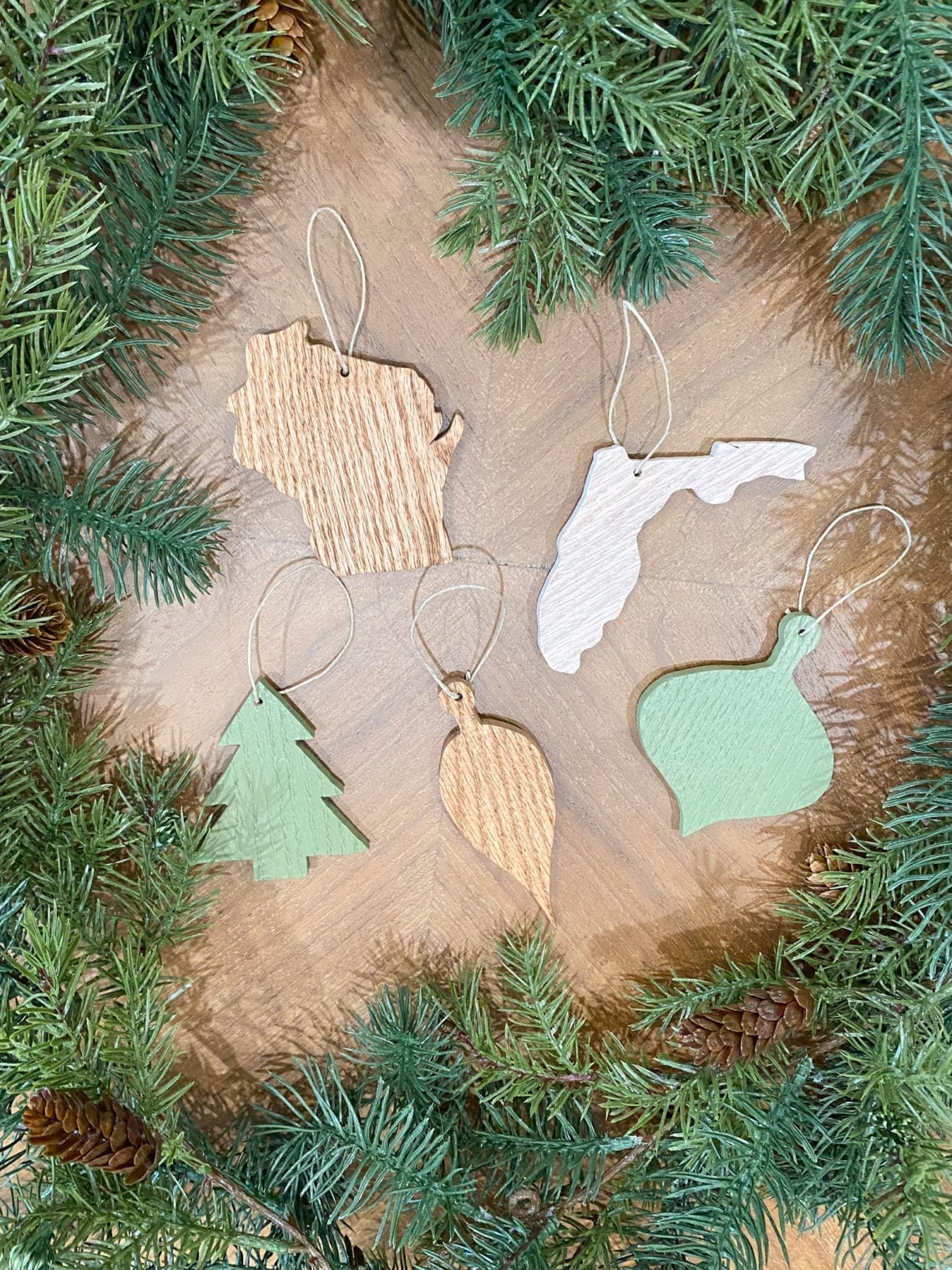
The appeal of these wooden ornaments is how little they ask of you. Cut into simple shapes a state, a tree, a leaf, an onion dome each one is sanded smooth and left raw. No paint, no stain, no gloss. Arranged on a wooden surface with a few sprigs of greenery and a pinecone, they read as a deliberate composition rather than a random collection. The palette of wood tones, sage green, and white keeps the look modern and restrained. What defines this style is the absence of decoration: the shape alone carries the ornament. The ratio of negative space to object is high, which is exactly what minimalist decor requires.
Farmhouse Flair: Book Page and Dried Orange Ornaments
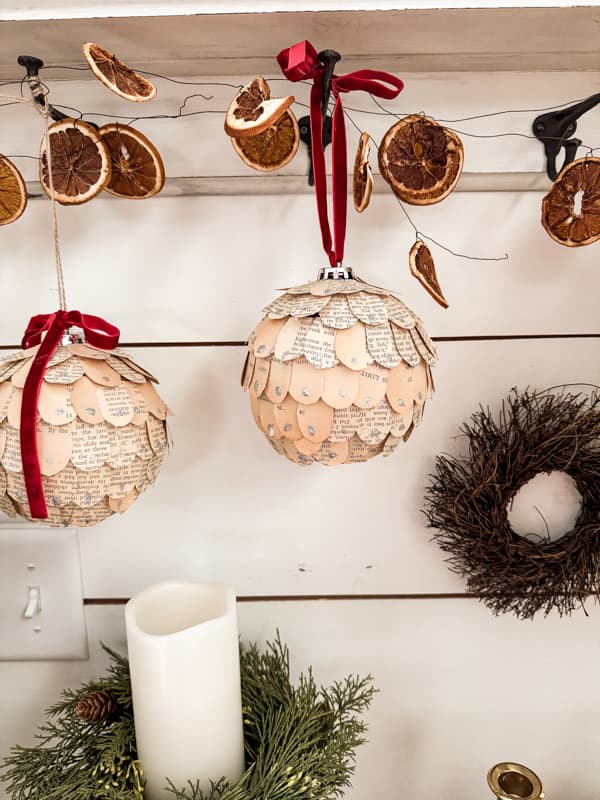
This is a look that knows what it is. Book pages are folded into simple shapes and hung with twine, and dried orange slices add warmth and color. A small twig wreath and a red ribbon complete the grouping. The palette stays in the farmhouse lane: cream, brown, red, and soft green. What makes the style work is the mix of materials. The paper is flat and matte, the orange slices are translucent and textured, the twig is rough. Against a wood shelf, the ornaments catch ambient light in different ways. The paper reads as soft, the orange reads as warm. That variety keeps a monochromatic palette from feeling flat.
Industrial Chic: Metal Washer Snowflake Ornaments
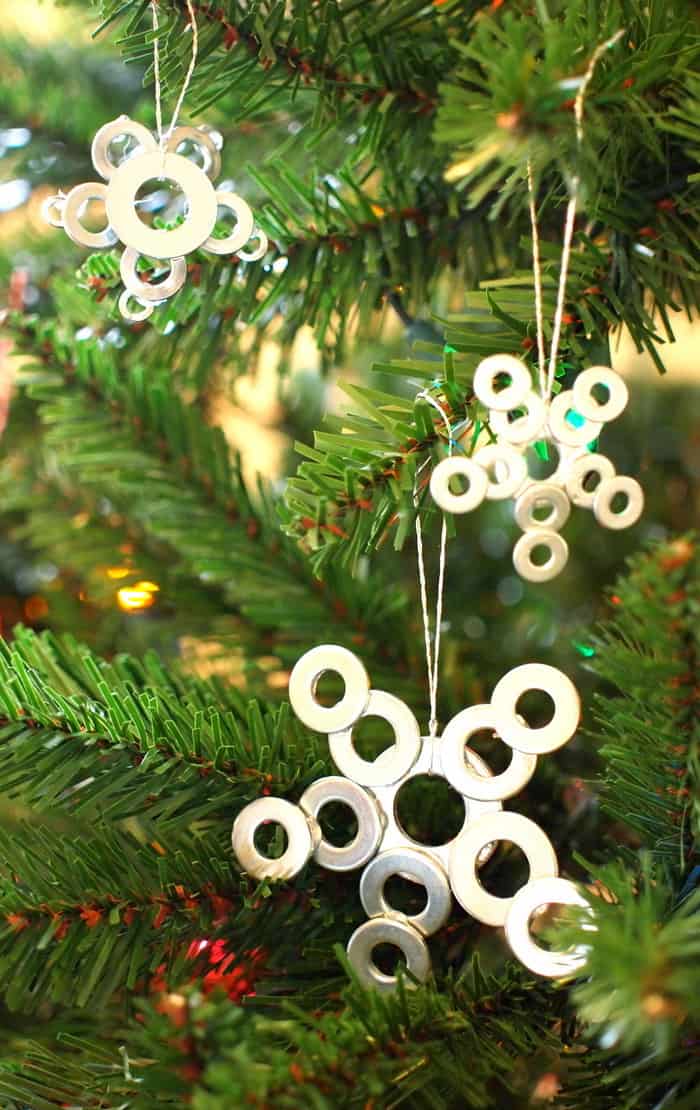
Metal washers arranged into snowflake shapes create a modern look without feeling cold. Three of them hang on a tree, each one a cluster of silver washers in graduated sizes, tied together with thin string. The geometry is clean and the metal catches the tree lights, but the handmade assembly keeps it from feeling industrial.
The palette is simple: silver and white, with the warm glow of the tree lights reflecting off the metal. What defines the style is the precision of the layout. Each washer sits flat against the next, creating a star-like silhouette. The ratio of metal to open space is balanced, so the ornament appears airy without being heavy. On a minimalist tree, these snowflakes add structure without clutter.
Crafty Creations: Yarn Wreath Ornaments
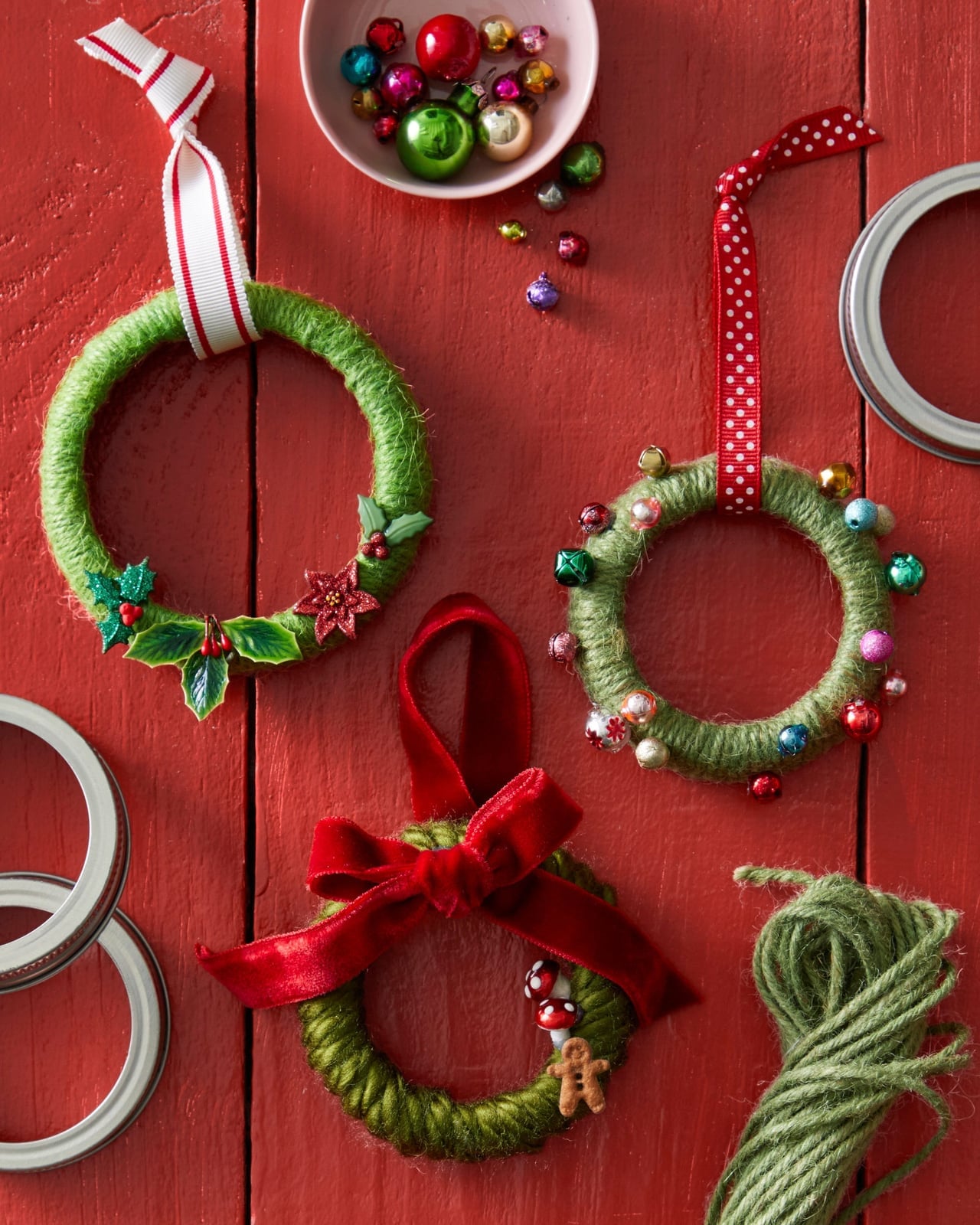
A trio of detailed yarn wreaths sits in a top-down flat lay on a craft table, surrounded by supplies under bright overhead light. The green, red, and white palette gives a crafty feel, and the ribbon, holly, and poinsettia accents give each wreath its own character. The mix of materials defines this look: smooth yarn wrapped tight against glossy leaves and soft ribbon loops. The ratio leans heavily on the yarn itself, with the embellishments kept small so they stay as accents. Adding too many different textures at once can break the look, so stick to one base material and two accents per ornament for a coherent set of DIY yarn wreath Christmas ornaments.
Sweet Appliqué: Felt Heart Ornaments with Trees
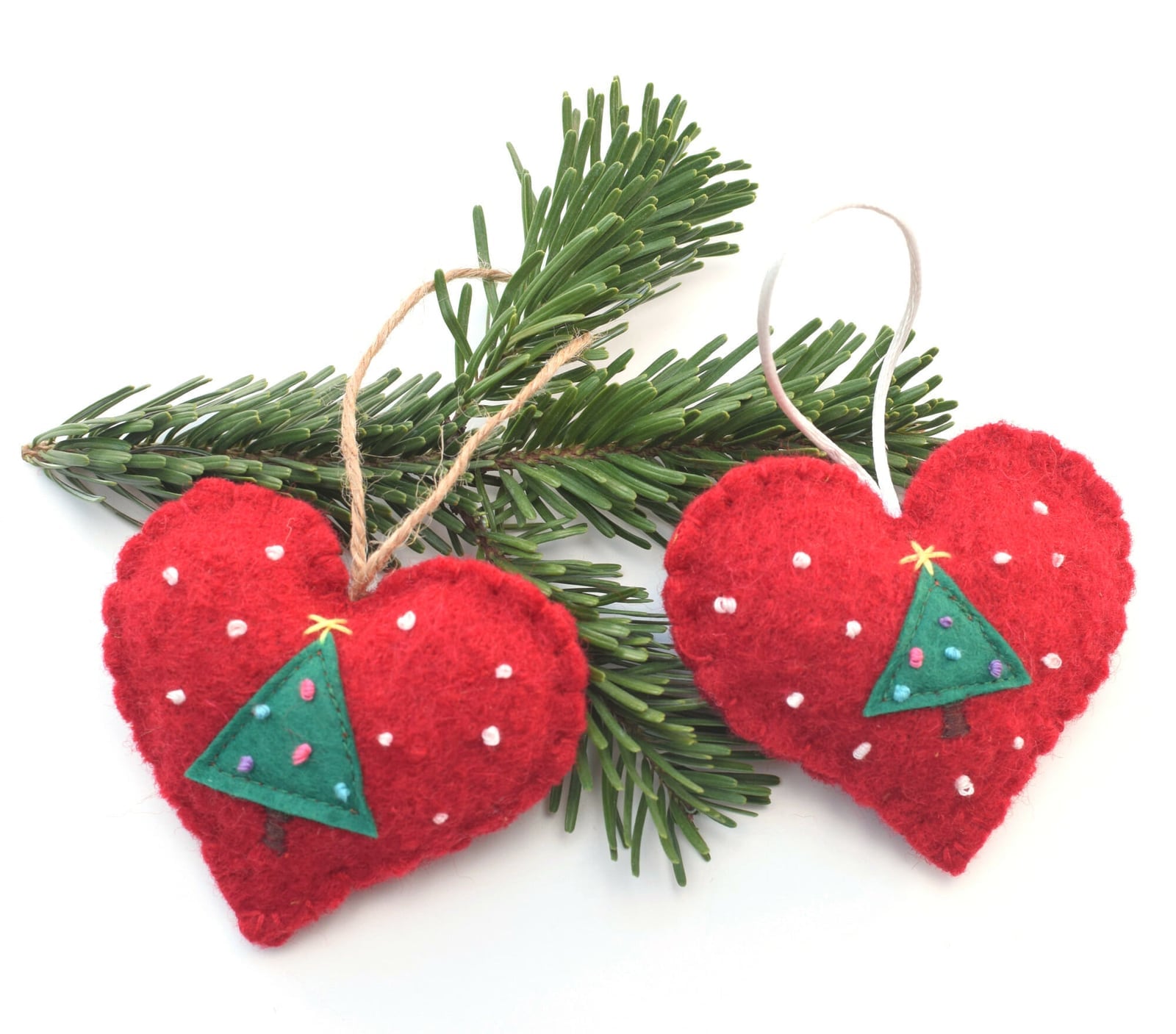
Handmade felt ornaments rely on simple appliqué so the shape reads clearly at a distance. Two red felt hearts, each stitched with a green tree motif, hang against a Christmas tree in soft studio light, arranged with greenery around them. The handmade, felt style depends on the smooth heart base and the layered tree appliqué, with thread and twine adding subtle texture. The heart shape dominates, with the tree taking up about a third of the surface. Using too many colors or fussy stitches can obscure the silhouette. For a renter-friendly approach, these ornaments hang on twine loops that can be removed without marking the tree, making them easy to pack away and reuse next season.
Traditional Elegance: Floral Patterned Ornament
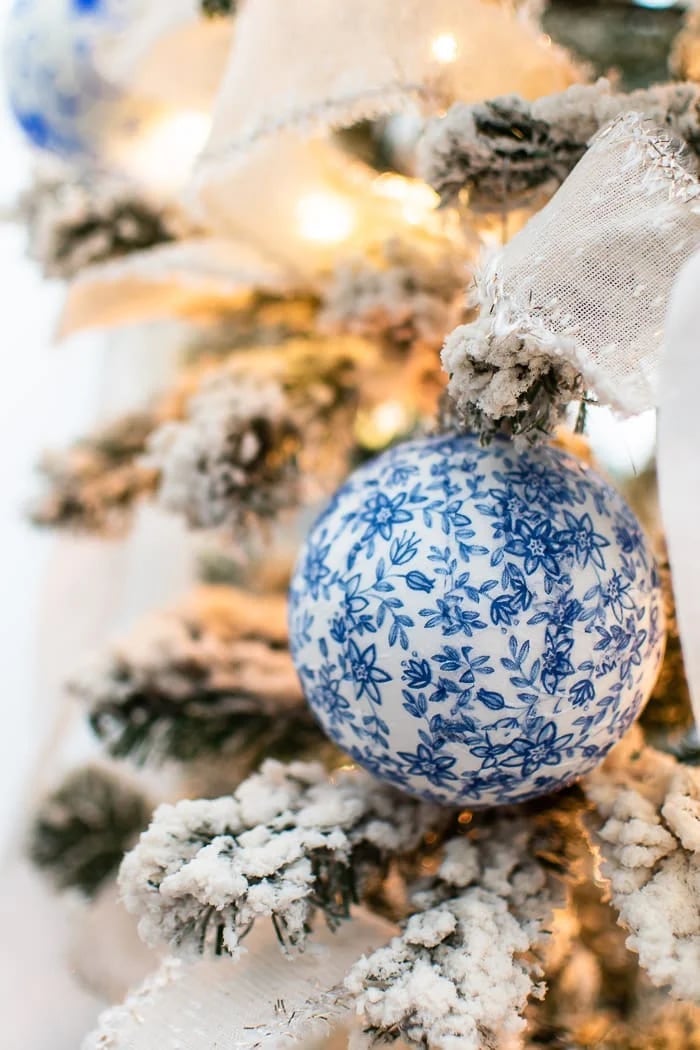
Where a solid bauble fades into the tree, a patterned one holds its own. This blue and white floral ornament hangs among the branches under soft ambient light, with bokeh blurring the background. The traditional floral style relies on the intricate blue pattern and the white fabric base, with a ribbon loop adding a simple finish. The ratio favors the pattern covering most of the surface, leaving just enough negative space for the eye to rest. Pairing it with other busy ornaments on the same branch can crowd the look, so let this one sit among solid or matte baubles for the pattern to stand out.
For a styling variation, group several of these floral ornaments on one section of the tree instead of scattering them. The repetition of the same pattern creates a collected feel without needing variety. The ribbon loop can be swapped for a metallic one to shift the look from traditional to slightly more formal, though the fabric and bauble construction stays the same.
Festive Packaging: Gift Box Ornament
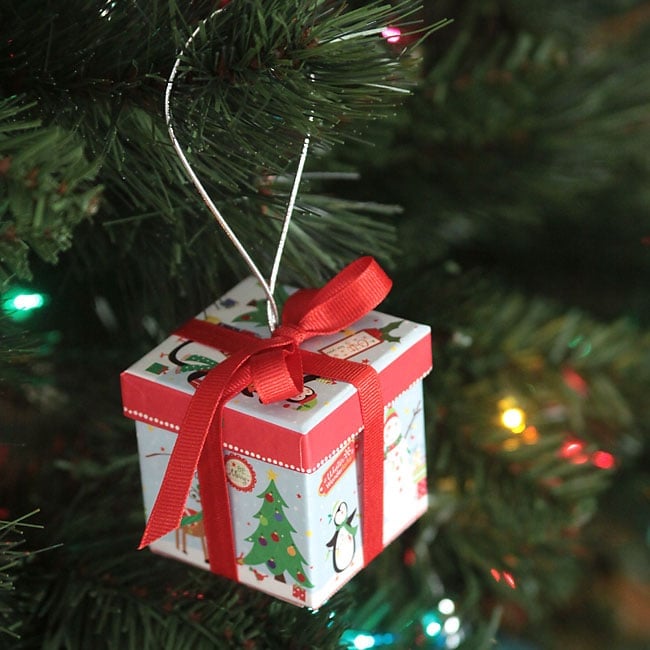
The miniature gift box ornament hangs under ambient light, its red, white, and green paper construction tied with ribbon. The traditional style depends on clean folds and crisp edges, so the paper needs to be sturdy enough to hold its shape. The ratio is box to ribbon at about three to one, with the ribbon acting as a visual anchor. Paper that buckles or ribbon that frays ruins the look, so choose a medium-weight craft paper and cut ribbon ends cleanly. For durability, store these flat in a shallow box instead of hanging them loose, since the folded corners can crease under pressure. The ribbon loop is the weak point, so reinforce it with a small dot of glue where it meets the paper.
Playful Miniatures: Popsicle Stick Sled Ornament
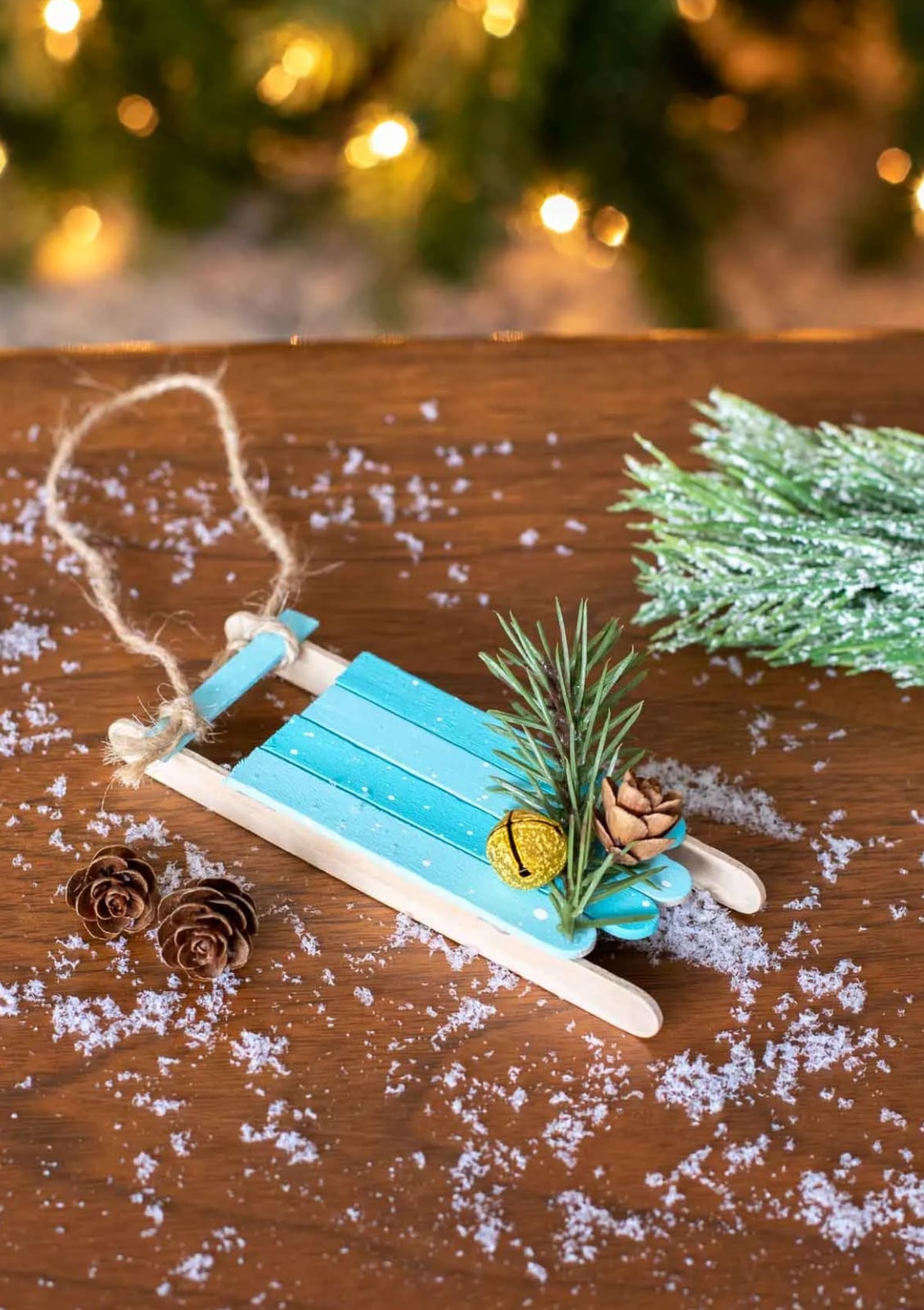
This miniature sled ornament proves that scale and proportion matter more than complexity. Made from popsicle sticks and twine, it sits on a wood surface with a pine sprig and small bell beside it, all under soft warm light. The rustic palette of blue, wood, green, and gold looks natural and understated. The key is the sled itself: the sticks are arranged in a simple runner-and-platform structure, with the twine lashing them together. The pine sprig and bell are accents, not the main event. Making the sled too wide or the twine too thick throws off the miniature scale. Keep the proportions tight and the additions minimal, so the sled stays a recognizable object and not a pile of sticks.
Final Thoughts
The real takeaway from these 20 simple DIY Christmas ornaments is that a few basic supplies and an hour or two of hands-on time can yield decorations that feel personal rather than store-bought. Stick to materials that match your existing holiday palette, and store finished ornaments in a dry, cool spot to keep paper and natural elements from warping or fading. For outdoor display, check your USDA zone first, since pine cones, dried fruit, and paper can degrade quickly in wet weather. With a little planning, you can build a collection that grows more meaningful each year.